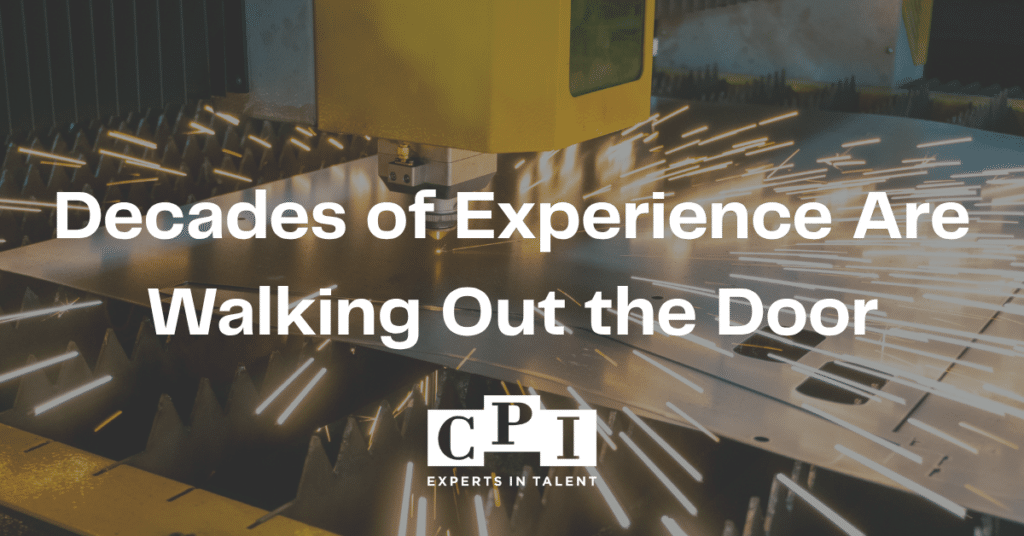
The Great Retirement Wave in Manufacturing is no longer a future concern. Instead, it is happening right now.
Across the country, experienced machinists, welders, maintenance technicians, engineers, and production leaders are retiring. Meanwhile, many of these professionals have spent decades developing specialized skills that are difficult to replace.
As a result, manufacturers face more than a hiring challenge. They face a knowledge challenge.
When experienced employees leave, they take years of expertise with them. Therefore, companies that fail to plan ahead may struggle to maintain productivity, quality, and growth.
In addition, many experts believe the manufacturing workforce shortage will become even more severe as retirement rates continue to increase.
Why the Great Retirement Wave in Manufacturing Is Accelerating
Manufacturing has long depended on a highly skilled workforce. However, many of those workers are now approaching retirement age.
According to the U.S. Bureau of Labor Statistics, many future job openings will come from workers leaving the labor force or transferring to other occupations. In manufacturing, that trend can create serious pressure for employers that already struggle to find skilled workers.
In addition, the Manufacturing Institute has highlighted the aging manufacturing workforce as a major issue for the industry.
Together, these trends create a perfect storm.
Companies are facing:
- An aging workforce
- Increased competition for talent
- Fewer experienced replacements
- Longer hiring timelines
- Growing training requirements
Consequently, workforce planning has become a critical business strategy rather than an HR function.
How the Great Retirement Wave in Manufacturing Impacts Knowledge Transfer
Most companies focus on replacing a position after an employee retires. Unfortunately, replacing the person is often the easy part.
However, replacing the knowledge is much harder.
For example, a senior CNC programmer may know exactly how a machine behaves during specific production runs. Similarly, a maintenance technician may recognize the early signs of a recurring equipment failure. Meanwhile, a quality manager may understand customer requirements that are not documented anywhere else.
This type of institutional knowledge develops over years of experience.
When these employees retire, that expertise often disappears as well.
As a result, organizations may experience:
- Increased downtime
- Production delays
- More quality issues
- Longer onboarding periods
- Reduced operational efficiency
Ultimately, many manufacturers underestimate this risk until it affects daily operations.
Manufacturing Jobs Most Affected by the Retirement Wave
Some positions are particularly vulnerable to retirement-related turnover.
Skilled Trades Professionals and the Great Retirement Wave in Manufacturing
For example, many manufacturing companies already struggle to find experienced:
- CNC Machinists
- Welders
- Industrial Electricians
- Tool and Die Makers
- Maintenance Technicians
- Machine Builders
CPI supports many of these hard-to-fill roles through its manufacturing staffing expertise. In many facilities, these professionals have been with the company for twenty years or more. Therefore, replacing them can take months rather than weeks.
Engineering Leaders and the Manufacturing Workforce Shortage
In addition, senior engineers often serve as both technical experts and mentors.
They possess valuable knowledge related to:
- Product development
- Manufacturing processes
- Customer requirements
- Regulatory compliance
- Continuous improvement initiatives
Without a succession plan, organizations risk losing critical technical expertise.
For employers building technical teams, CPI also provides aerospace engineering staffing support to defense contractors, aerospace manufacturers, federal agencies, and technology integrators, delivering talent solutions tailored to the unique requirements of the aerospace industry.
Operations Leadership and Retirement Planning
Likewise, plant managers and production supervisors play a major role in operational success. They understand workforce management, scheduling, customer expectations, and facility performance. As a result, their departure can create significant disruption if no replacement is prepared.
How the Great Retirement Wave in Manufacturing Impacts Growth
Many business leaders view retirement as a staffing issue. However, the impact extends much further.
In fact, a workforce shortage can affect nearly every part of an organization.
For example, companies may experience:
- Increased overtime costs
- Delayed customer deliveries
- Reduced production capacity
- Lower employee morale
- Higher turnover
- Increased recruiting expenses
Furthermore, customers may notice slower response times and inconsistent service levels.
Over time, these issues can affect profitability and competitiveness.
The Great Retirement Wave in Manufacturing is forcing many organizations to rethink how they recruit, train, and retain skilled employees.
The National Association of Manufacturers continues to track workforce concerns through its manufacturer outlook research. As a result, employers can see how closely talent challenges connect to business confidence and growth.
Therefore, manufacturers must address workforce planning before retirement notices begin arriving.
Five Ways to Prepare for the Great Retirement Wave in Manufacturing
Fortunately, employers can take proactive steps to reduce risk.
1. Identify High-Risk Positions
First, determine which roles would be most difficult to replace.
2. Document Critical Knowledge
Next, create a process for capturing expertise before employees retire.
3. Develop Internal Talent
Meanwhile, many future leaders already work within your organization.
4. Expand Recruiting Efforts
However, traditional recruiting methods may no longer be enough.
Employers can also review the types of roles CPI supports through positions we fill.
5. Build a Long-Term Workforce Plan
Ultimately, companies that take a long-term approach are often better prepared for future workforce changes.
Why Veterans Can Help Solve Manufacturing Workforce Shortages
Veterans represent one of the strongest talent pools available to manufacturers.
Many military professionals possess experience in equipment maintenance, troubleshooting, leadership, logistics, and technical documentation.
In addition, veterans often excel in fast-paced and team-oriented environments.
As a veteran-founded company, CPI has seen firsthand how military experience translates into manufacturing success. Therefore, employers seeking skilled technical talent should also consider CPI’s experience as a veteran staffing agency and its deep background in defense staffing.
Preparing for the Great Retirement Wave in Manufacturing
Organizations that invest in workforce planning today will be better positioned to maintain productivity, protect institutional knowledge, and support future growth.
Meanwhile, companies that delay may find themselves competing for an increasingly limited pool of experienced talent.
Ultimately, the difference between success and struggle often comes down to preparation.
How CPI Helps Manufacturers Prepare for Workforce Changes
Since 1982, Contract Professionals, Inc. has helped manufacturers, engineering organizations, and defense contractors build strong workforces.
Today, CPI understands the challenges created by workforce shortages, succession planning gaps, and skilled trades retirements.
Whether your organization needs CNC machinists, maintenance technicians, engineers, quality professionals, or manufacturing leaders, CPI can help identify the talent needed to support long-term success.
Learn more about CPI’s staffing services and talent acquisition solutions. If your organization is preparing for upcoming retirements, contact CPI to discuss your hiring strategy.
The Great Retirement Wave in Manufacturing is already underway. Therefore, the best time to prepare is now.